
Introduction
For wetsuit OEM manufacturers and global water sport brands, choosing between stitched seam vs glued seam neoprene wetsuit is a key factor that directly determines waterproof performance, product durability and retail pricing. Many entry-level wetsuits adopt stitched craftsmanship, while high-end professional diving and surfing suits mostly use glued seam technology.
Different seam structures lead to huge gaps in water tightness, stretchability and wind resistance. Wrong craftsmanship selection will cause water leakage, heat loss and poor user experience. As a professional neoprene wetsuit OEM factory with mature production lines, Yonghe Sport provides both stitched and glued seam processing solutions. We support customized craftsmanship according to brand positioning and product grade through our custom neoprene wetsuit service. All finished products pass strict waterproof and tensile testing following international industry standards.
What Is Stitched Seam Neoprene Wetsuit?
Stitched seam is the most traditional and common wetsuit manufacturing process. Workers use professional sewing machines to stitch neoprene fabric pieces together with nylon elastic thread. The stitching lines fix the fabric structure and ensure basic shaping performance of the wetsuit.
This process features simple operation, fast production speed and low processing cost. It is suitable for mass production of entry-level and casual water sport products. However, the stitching will create tiny needle holes on the neoprene surface, which inevitably reduces the overall waterproof performance of the wetsuit.
What Is Glued Seam Neoprene Wetsuit?
Glued seam is an upgraded high-end wetsuit manufacturing technology. Instead of sewing, workers use professional waterproof neoprene glue to bond fabric edges tightly. After high-temperature pressing and curing, the seams form an integrated fully closed structure without any needle holes.
Glued seam completely solves the water leakage problem of needle holes. It greatly improves the comprehensive performance of the wetsuit in terms of waterproofing, wind resistance and thermal insulation. This process is widely used in professional surfing, cold water diving and high-end retail wetsuit products.
Core Comparison: Stitched Seam vs Glued Seam Neoprene Wetsuit
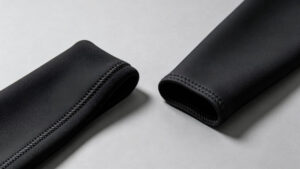
1. Waterproof & Thermal Performance Glued seam wetsuits achieve full seam closure with zero needle holes. They effectively block seawater infiltration and cold wind penetration, maintaining stable body temperature even in low-temperature seawater. Stitched seam wetsuits have tiny gaps at needle holes. Although they can meet casual water activities, slow water seepage will occur during long-time diving, resulting in heat loss.
2. Durability & Structural Stability Glued seam forms an integrated fabric structure with strong tensile resistance. It is not easy to crack or peel after repeated stretching and folding, adapting to frequent outdoor sports. Stitched seam relies on thread traction. Long-term stretching may cause thread loosening and local deformation, shortening product service life.
3. Wearing Comfort & Flexibility Glued seam is flat and seamless without raised stitching lines. It fits the skin closely without friction pressure, bringing smoother wearing experience. Stitched seam has convex thread lines, which may cause slight friction and restraint during large-scale limb movements.
4. Production Cost & MOQ Stitched seam has low processing difficulty and fast mass production speed, with lower wholesale cost and flexible small-batch MOQ. It is friendly for startup brands and promotional product orders. Glued seam requires manual fine processing and longer curing time, with relatively higher labor and time costs, suitable for high-end customized orders.
5. Product Positioning & Market Price Stitched seam wetsuits belong to entry-level and mid-range casual products, suitable for beach leisure, swimming and beginner water sports. Glued seam wetsuits are positioned in high-end professional markets, targeting professional surfers, deep-water divers and high-standard retail brands.
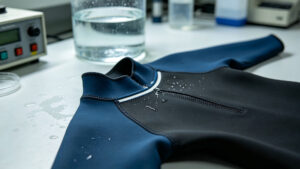
How to Choose the Right Seam Process for OEM Orders
Choose Stitched Seam If: Your products are positioned in casual water sports, beach leisure, beginner training and low-budget wholesale markets. You need fast delivery and cost-effective batch supply.
Choose Glued Seam If: Your brand focuses on high-end retail, professional surfing, cold water diving and high-quality user experience. You pursue zero water leakage, strong warmth and long durability.
FAQ
Q1: Are glued seam wetsuits completely waterproof? A1: Yes. The fully bonded seamless structure eliminates needle hole leakage, providing far better waterproof performance than traditional stitched wetsuits.
Q2: Can you do mixed stitched and glued seam customization? A2: Yes. We support hybrid craftsmanship, using glued seams on key waterproof areas and stitched seams on ordinary parts to balance quality and cost.
Q3: Do glued seam wetsuits have longer service life? A3: Definitely. Integrated glued seams resist stretching and corrosion, effectively extending the overall service life of neoprene wetsuits.
Conclusion
The difference between stitched seam vs glued seam neoprene wetsuit determines the final grade and market competitiveness of water sport products. Stitched craftsmanship is cost-effective for daily casual wetsuit OEM, while glued craftsmanship is the standard for high-performance professional wetsuits. If you need customized seam process solutions or wholesale wetsuit production services, contact Yonghe Sport to get professional technical support and accurate quotations.