
Introduction
When designing waterproof outdoor accessories, protective gear and insulated products, brand buyers often struggle to choose neoprene vs EPDM rubber for waterproof products. Both materials deliver excellent water resistance, weather resistance and sealing performance. However, their softness, stretch level, processing difficulty and application scenarios differ greatly.
Many OEM clients mistakenly replace neoprene with EPDM to cut costs, only to find the final products too hard, poorly fitted or uncomfortable for body contact.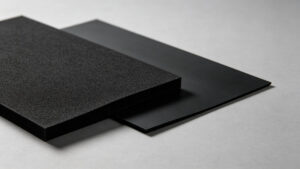 Therefore, understanding the essential differences between neoprene and EPDM rubber is critical for product positioning and material selection. As a professional neoprene manufacturer with 15 years of OEM experience, Yonghe Sport provides accurate material comparison to help global buyers make reasonable decisions. We support customized material thickness and surface treatment for all waterproof product projects via our neoprene OEM service. Moreover, we refer to international rubber material performance standards ASTM to ensure stable batch quality.
Therefore, understanding the essential differences between neoprene and EPDM rubber is critical for product positioning and material selection. As a professional neoprene manufacturer with 15 years of OEM experience, Yonghe Sport provides accurate material comparison to help global buyers make reasonable decisions. We support customized material thickness and surface treatment for all waterproof product projects via our neoprene OEM service. Moreover, we refer to international rubber material performance standards ASTM to ensure stable batch quality.Basic Material Characteristics
Neoprene is a flexible foam composite material made of CR or SBR rubber foaming. It features sponge porous structure, soft hand feeling, excellent elasticity and buffer performance. It is widely used in wearable water sport products and soft protective accessories.
EPDM rubber (Ethylene Propylene Diene Monomer) is a dense solid rubber material. It has outstanding weather resistance, ozone resistance and ageing resistance. Unlike spongy neoprene, EPDM is firmer, less stretchable and mainly used for industrial sealing, gaskets and rigid waterproof parts.
Core Comparison: Neoprene vs EPDM Rubber for Waterproof Products
1. Waterproof & Sealing Performance EPDM rubber has dense solid structure with zero water permeability. It performs better in static waterproof sealing scenarios such as equipment gaskets and pipeline waterproof strips. Neoprene relies on closed-cell foam structure to achieve waterproof effects. While not 100% impermeable like solid rubber, it balances waterproof capability and softness perfectly, making it ideal for dynamic wearable waterproof products.
2. Softness & Flexibility Neoprene is extremely soft and stretchable. It can bend, fold and twist repeatedly without deformation. It fits human body curves perfectly and causes no restraint during wearing. On the contrary, EPDM rubber is stiff and low-elastic. It cannot be used for long-time body contact or frequently folded products.
3. Ageing & Weather Resistance EPDM enjoys a worldwide reputation for superior outdoor ageing resistance. It can resist strong UV rays, high temperature and cold climate without cracking or hardening. High-grade CR neoprene also provides reliable outdoor durability, but SBR neoprene is relatively weaker in long-term outdoor exposure.
4. Processing & Customization Neoprene is easy to cut, sew, laminate and print. It supports complex shapes, curved surface fitting, logo printing and multi-layer composite processing, which is suitable for diversified OEM personalized products. EPDM is mostly produced by die-cutting and mould pressing, with single molding style and low flexibility for personalized customization.
5. Comfort & Skin Friendliness Neoprene is widely verified in wearable products. After skin-safe treatment, it can directly contact human skin for a long time. EPDM is too hard for wearable scenarios and is not suitable for sports or daily protective accessories.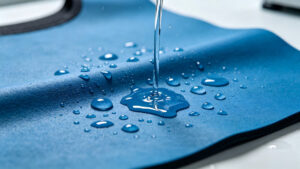
Best Application Scenarios for Each Material
Neoprene Waterproof Product Applications Custom wetsuits, surfing suits, neoprene gloves, diving socks, neoprene cup sleeves, laptop protective sleeves, fitness protective gear and wearable thermal insulation products. It is the optimal choice for flexible, comfortable and foldable waterproof OEM goods.
EPDM Rubber Waterproof Applications Industrial equipment waterproof gaskets, automobile sealing strips, pipeline insulation rubber strips, outdoor fixed waterproof accessories. It is more suitable for rigid, fixed and long-term outdoor sealing scenarios rather than wearable consumer products.
FAQ
Q1: Which material is cheaper for bulk waterproof OEM? A1: EPDM raw material cost is lower, but its processing flexibility is poor. For wearable consumer products, neoprene delivers higher cost performance and better user experience.
Q2: Can EPDM replace neoprene for wetsuit production? A2: Absolutely not. EPDM lacks elasticity and softness, which cannot meet the stretching and fitting requirements of water sport wetsuits.
Q3: Can you do neoprene and EPDM composite customized products? A3: Yes. We support composite structure OEM, combining neoprene’s softness and EPDM’s wear resistance for special industrial waterproof products.
Conclusion
To sum up, choosing neoprene vs EPDM rubber for waterproof products depends entirely on product usage scenarios. If you need soft, stretchable, wearable and customizable waterproof consumer goods, neoprene is the best option. If you require rigid, long-term outdoor static waterproof sealing parts, EPDM rubber is more suitable. Contact Yonghe Sport to obtain professional material selection suggestions and customized OEM solutions for your wholesale projects.