
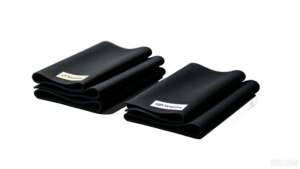
Introduction
Choosing betweenCR neoprene vs SBR neoprene for OEM projects is one of the most critical decisions for water sport brands, accessory wholesalers, and industrial protective product manufacturers. Moreover, many startup buyers face material selection confusion due to similar foam appearances but completely different practical performances.
SBR and CR neoprene are the two most mainstream neoprene foam materials in the global OEM market. Each material has unique advantages in stretchability, waterproof capability, aging resistance, and production cost. Selecting the wrong material will lead to product quality complaints, shortened service life, and unnecessary cost waste. As a professional neoprene manufacturer with 15 years of OEM experience, Yonghe Sport summarizes the core differences and applicable scenarios of the two materials for global wholesale buyers. We provide customized neoprene OEM and ODM services to match different material solution demands. Besides, we strictly test all material performances following international industry standards ASTM to ensure batch stability.
Core Material Definition of SBR and CR Neoprene
SBR neoprene, namely Styrene Butadiene Rubber neoprene, is the most cost-effective conventional neoprene material. It features soft texture, basic waterproof and shockproof performance, and mature mass production technology. Therefore, it is widely used in low to medium-end neoprene accessories and daily protective products.
CR neoprene refers to Chloroprene Rubber neoprene, a high-grade upgraded neoprene material. Compared with SBR foam, CR neoprene has a more compact internal foam structure. It effectively improves the defects of poor aging resistance and easy water penetration of ordinary materials, making it the preferred material for high-end water sport equipment and long-term outdoor products.
Key Performance Differences: CR Neoprene vs SBR Neoprene for OEM
To help OEM buyers quickly confirm suitable materials, we sort out the core performance gaps between SBR and CR neoprene from five practical dimensions.
1. Waterproof & Sealing Performance CR neoprene has dense and uniform foam pores with almost no hollow gaps. It can block moisture and seawater penetration stably for a long time, adapting to cold water diving and frequent marine use. In contrast, SBR neoprene has relatively loose foam pores. Although it has basic waterproof effects, it is prone to water seepage after long-term soaking and repeated extrusion, so it is more suitable for daily casual water products.
2. Aging & UV Resistance CR neoprene shows excellent resistance to ultraviolet rays and seawater corrosion. It is not easy to harden, fade or peel under long-term outdoor sunlight and marine environment exposure. However, SBR neoprene is sensitive to UV rays and salt corrosion. It will gradually lose elasticity and turn yellow after 3-6 months of outdoor use, which limits its outdoor service life.
3. Stretch & Wearing Comfort SBR neoprene has super soft hand feel and high four-way stretchability. It fits the human body well and has low wearing restraint, which is very suitable for children’s water products and casual protective gear. CR neoprene has slightly lower stretch than SBR but better shape retention. It is not easy to deform after long-term wearing and extrusion, maintaining stable product appearance and performance.
4. Production Cost & MOQ SBR neoprene has low raw material cost and simple processing technology, with lower wholesale prices and flexible small-batch customization. It is friendly for startup brands and promotional product orders. CR neoprene has higher raw material and production costs, positioning for mid-to-high-end customized OEM orders with high product quality requirements.
5. Environmental & Safety Performance Both materials can be made into REACH-compliant and odor-free grades. However, CR neoprene has more stable chemical properties, no volatile substances precipitation, and better skin-friendly safety, meeting the strict standards of European and American high-end retail markets.
Applicable OEM Scenarios for SBR & CR Neoprene
SBR Neoprene Best Applications Daily neoprene accessories including cup sleeves, laptop sleeves, ordinary fitness protective pads, pet casual life jackets, and low-budget customized wholesale products. It balances cost and basic performance, maximizing the cost performance of conventional OEM orders.
CR Neoprene Best Applications Professional surfing wetsuits, cold water diving suits, outdoor long-term protective equipment, medical rehabilitation braces, and high-end retail customized neoprene products. Its durable and stable performance effectively reduces after-sales quality problems for brand sellers.
FAQ
Q1: Which material is better for beginner wetsuit OEM? A1: For entry-level and casual water sport wetsuits, SBR neoprene is more cost-effective. For professional and cold-water diving wetsuits that require durability, CR neoprene is the ideal choice.
Q2: Can you provide mixed SBR and CR neoprene composite OEM solutions? A2: Yes. We support customized composite materials, using SBR for comfortable fitting areas and CR for wear-resistant and waterproof key parts, balancing product performance and cost.
Q3: Is CR neoprene completely superior to SBR neoprene? A3: No. SBR neoprene has unique advantages in softness and cost performance. The best material selection depends on your product positioning, usage scenario, and budget.
Conclusion
In short, CR neoprene vs SBR neoprene for OEM has no absolute good or bad, only suitable or unsuitable. SBR neoprene is the preferred choice for cost-effective daily accessory OEM, while CR neoprene is tailored for high-performance and long-service-life outdoor water sport products. If you are looking for a reliable neoprene OEM manufacturer to customize exclusive material solutions for your brand, contact Yonghe Sport to get free material samples and competitive wholesale quotations.