
Introduction
When manufacturing sports gear, daily protective tools and industrial auxiliary accessories, global OEM buyers often compare neoprene vs nitrile rubber for protective accessories. These two elastic rubber materials are widely used in protective product manufacturing due to their excellent shockproof, anti-slip and durable properties. Even so, their core advantages and applicable scenarios are completely different, which easily causes material selection confusion for brand wholesalers.
Nitrile rubber is famous for outstanding oil resistance and chemical stability, while neoprene excels in softness, stretchability and wearing comfort. Choosing the wrong material will lead to insufficient product protection performance or poor user experience. As a professional neoprene OEM manufacturer focusing on protective accessory customization, Yonghe Sport deeply analyzes the differences between the two materials to help customers make accurate decisions. We provide one-stop customized production through our neoprene OEM service, and all material performance tests refer to international industry standards to ensure qualified bulk product quality.
Basic Overview of Neoprene and Nitrile Rubber
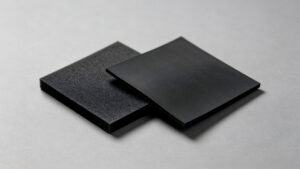
Neoprene is a closed-cell foam rubber material divided into SBR and CR grades. It features ultra-soft texture, high four-way stretch, good shock absorption and waterproof performance. It is lightweight and skin-friendly, making it the mainstream material for wearable protective accessories and water sport products.
Nitrile rubber (NBR) is a synthetic rubber with dense solid structure. Its biggest advantage is excellent oil resistance, abrasion resistance and chemical corrosion resistance. However, it has poor elasticity and softness, and is mostly used for industrial protection, mechanical accessories and oil-resistant sealing products.

Core Performance Comparison: Neoprene vs Nitrile Rubber for Protective Accessories
1. Elasticity & Wearing Comfort Neoprene has obvious advantages in flexibility. The foam structure allows the material to stretch freely with body movements, fit tightly without squeezing the skin, and is not easy to deform after long-term use. It is very suitable for wearable protective accessories that require frequent movement. In contrast, nitrile rubber is hard and low-elastic, with poor fitting performance, and long-term wearing is prone to restraint and discomfort.
2. Oil & Chemical Resistance Nitrile rubber is the winner in industrial anti-oil scenarios. It can resist the erosion of various mechanical oils, lubricants and conventional chemical solvents, and has stable performance in oily working environments. Neoprene has ordinary oil resistance, suitable for daily conventional environments, but not recommended for long-term contact with industrial oil and chemical liquids.
3. Shockproof & Protective Effect Thanks to the porous foam buffer structure, neoprene has excellent shock absorption and anti-collision performance. It can effectively buffer external impact force, widely used in sports protection, equipment protection and product anti-collision packaging. Nitrile rubber is mainly wear-resistant and oil-resistant, with weak buffering performance, so its protective focus is different from neoprene.
4. Waterproof & Weather Resistance Neoprene’s closed-cell structure provides stable waterproof and moisture-proof capabilities, and high-grade CR neoprene also has good UV and seawater aging resistance, adapting to outdoor and water sport scenarios. Nitrile rubber has poor weather resistance, easy to harden and age under long-term sunlight exposure, and is not suitable for outdoor open-air use.
5. Customization & Processing Performance Neoprene supports printing, lamination, cutting, sewing and multi-layer composite processing, with rich personalized customization methods, which can meet the diverse design needs of brand protective accessories. Nitrile rubber has single processing method, mostly die-cut and molded, with low flexibility for personalized OEM customization.
Applicable OEM Scenarios of Two Materials
Neoprene Protective Accessories Applications Sports protective knee pads, elbow pads, wrist guards, neoprene equipment protective sleeves, laptop shockproof bags, outdoor anti-collision protective gear, water sport protective accessories and wearable daily protective products. It focuses on comfort, shock absorption and flexible protection.
Nitrile Rubber Protective Accessories Applications Industrial oil-resistant gloves, mechanical wear-resistant gaskets, equipment oil-resistant sealing parts, factory anti-slip rubber mats and chemical contact protective tools. It focuses on industrial wear resistance, oil resistance and corrosion resistance.
FAQ
Q1: Which material is more suitable for sports protective accessory OEM? A1: Neoprene is the best choice for sports protective accessories. It has superior elasticity and comfort, fits human movement, and provides better shockproof protection effect.
Q2: Is nitrile rubber durable for daily protective products? A2: Nitrile rubber has good wear resistance but poor comfort and weather resistance, so it is not suitable for daily wearable protective products, only for industrial scenario use.
Q3: Can you customize mixed-material protective accessories? A3: Yes. We support composite customization of neoprene and nitrile rubber, combining neoprene’s comfort and nitrile’s oil resistance to meet special scenario protection needs.
Conclusion
In short, the choice between neoprene vs nitrile rubber for protective accessories depends on the core usage scenario. For wearable, shockproof, outdoor and personalized customized protective products, neoprene is the optimal solution. For industrial oil-resistant, wear-resistant and chemically resistant protective accessories, nitrile rubber is more applicable. If you have material selection confusion or customized OEM demands for protective accessories, contact Yonghe Sport to get free material samples and professional wholesale solutions.