
Introduction
Neoprene thickness wetsuit OEM selection is the core step for successful wetsuit product positioning. Many OEM buyers only focus on stitching craftsmanship while ignoring thickness matching. In fact, improper neoprene thickness selection directly causes poor flexibility, insufficient warmth and bad user reviews.
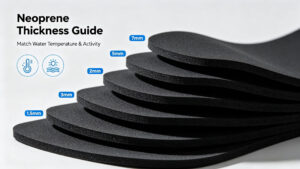
The most common commercial neoprene thickness options are 2mm, 3mm, 5mm and 7mm. Each neoprene thickness matches unique water temperature ranges, sports scenarios and target customer groups. Choosing the correct neoprene thickness greatly improves your wetsuit’s comfort, thermal performance and retail competitiveness.
As a professional custom neoprene factory, Yonghe Sport offers precise neoprene thickness wetsuit OEM selection guidance. We help brands build seasonal and scenario-based wetsuit lines via our professional neoprene OEM service.
How Neoprene Thickness Affects Wetsuit Performance
Neoprene material relies on closed-cell foam to lock air and retain heat. Generally, a thicker neoprene layer traps more air. It delivers better thermal insulation and stronger cold resistance for water sports.
Even so, thicker neoprene has minor drawbacks. It reduces overall flexibility, limits body movement and adds slight wearing weight. In contrast, thinner neoprene is lightweight and highly flexible, but it cannot withstand low water temperatures.
For this reason, professional neoprene thickness wetsuit OEM selection follows a simple rule. Warm water environments prioritize flexibility. Cold water environments prioritize thermal protection.
Full Specification Breakdown: 2mm, 3mm, 5mm, 7mm Neoprene
1. 2mm Neoprene (Ultra-Light & High Flexible) 2mm neoprene is the thinnest mainstream wetsuit thickness. It features ultra-light weight and maximum four-way stretch. It fits closely to the body without any bulky feeling. Applicable temperature: 26°C and above, tropical warm water Best scenarios: summer surfing, snorkeling, beach activities, swim leggings and casual rash guards OEM positioning: entry-level summer series, high-flexibility fashion water sport products
2. 3mm Neoprene (Most Popular Balanced Thickness) 3mm neoprene is the most versatile option for neoprene thickness wetsuit OEM selection. It balances steady warmth and excellent flexibility. It adapts to most global coastal water conditions. Applicable temperature: 20°C – 26°C, temperate warm water Best scenarios: all-season surfing, beginner diving and daily water fitness training OEM positioning: best-selling mid-range wetsuit series for retail brands
3. 5mm Neoprene (Cold Water Thermal Grade) 5mm neoprene provides significant thermal improvement. It resists long-term low-temperature water erosion and keeps body temperature stable during extended submersion. Applicable temperature: 14°C – 20°C, cool coastal water Best scenarios: autumn and winter surfing, recreational diving and long-distance water sports OEM positioning: high-end cold-proof series and seasonal upgrade products
4. 7mm Neoprene (Professional Extreme Cold Grade) 7mm neoprene is the thickest standard commercial thickness. It delivers maximum thermal protection and strong pressure resistance for harsh water environments. Applicable temperature: Below 14°C, cold and deep water Best scenarios: professional deep diving, winter triathlon competitions and cold-region water training OEM positioning: premium professional-grade custom wetsuit series
Common OEM Hybrid Thickness Matching Rules
Top-tier retail wetsuits rarely use single full-body thickness. Most adopt hybrid neoprene thickness splicing to balance warmth and flexibility.
3mm + 5mm Hybrid: Apply 5mm neoprene on the torso for stable warmth. Use 3mm neoprene on arms and legs for better movement. This is the most popular mid-to-high-end OEM solution.
5mm + 7mm Hybrid: Place 7mm neoprene on the chest and back core areas. Match 5mm neoprene on limbs. This design targets professional cold-water diving wetsuits.
Key OEM Selection Tips for Neoprene Thickness
1. Match thickness with target market climate Tropical markets focus on 2mm and 3mm neoprene. Temperate regions prefer 3mm and 5mm options. Cold climate markets require 5mm and 7mm thick wetsuits.
2. Combine thickness with stitching processes Thick 5mm and 7mm wetsuits pair perfectly with waterproof GBS seams. Thin 2mm and 3mm wetsuits work well with flatlock stitching for higher comfort.
3. Avoid over-design and cost waste Excessively thick neoprene increases material costs and reduces flexibility. Reasonable neoprene thickness wetsuit OEM selection optimizes both quality and profit margins.
FAQ
Q1: Which neoprene thickness is best for retail sales? A1: 3mm neoprene is the most market-friendly option. It fits most water temperatures and seasons, making it the safest bestseller for wetsuit OEM projects.
Q2: Can wetsuits use mixed neoprene thickness splicing? A2: Yes. Hybrid thickness design is a mature OEM technique. It effectively balances thermal performance and sports flexibility to upgrade product grade.
Q3: Does thicker neoprene mean better wetsuit quality? A3: No. Wetsuit quality depends on neoprene density, material grade and stitching quality. Thickness only adjusts thermal insulation and flexibility.
Conclusion
Accurate neoprene thickness wetsuit OEM selection defines your wetsuit’s seasonality, application scenarios and market competitiveness. Thin 2mm and 3mm neoprene suits warm-water casual sports, while thick 5mm and 7mm neoprene targets cold-water professional activities. Hybrid thickness design is the best OEM strategy to balance performance, comfort and manufacturing cost.
If you need professional neoprene thickness wetsuit OEM selection advice or custom wetsuit manufacturing, contact Yonghe Sport for free technical support and wholesale quotations.